
Wildlife Removal on Hutchinson Island — Coastal Property Defense
Hutchinson Island is a barrier island with the Atlantic on one side and the Indian River Lagoon on the other — oceanfront condos, Intracoastal estates and seasonal homes tucked into the dunes. That narrow strip of land between two waters is a wildlife corridor, and every roofline, seawall and dune-side lot sits right on it. We defend the barrier-island property against exactly that.
(772) 227-1522 · answered live, 24/7
The Hutchinson Island wildlife snapshot
Barrier-island living comes with a wildlife profile no inland home shares. A thin strip of land between the Atlantic and the lagoon, wrapped in dune vegetation and dotted with seasonal condos and estates, gives wildlife cover, water and quiet, empty buildings to exploit. Here’s the picture at a glance.
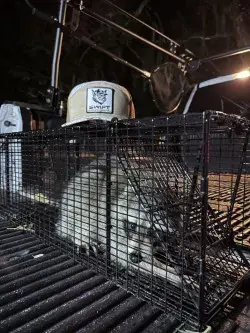
Between two waters
The Atlantic on the east and the Indian River Lagoon on the west put every lot on a narrow wildlife corridor with water on both sides.
Condos & estates
Oceanfront condo buildings and Intracoastal estates offer long rooflines, shared attics and countless soffit and vent gaps to exploit.
Seasonal & empty
Snowbird and vacation homes sit quiet for months, giving wildlife an undisturbed run at an attic, lanai or crawlspace before anyone notices.
Dune cover everywhere
Sea grape, palms and dune plantings wrap the buildings in constant cover and hand climbers a route to the roof.
Barrier island property risk zones
On a barrier-island property the pressure lands on a specific set of points. These are the zones our inspection works through first — and how hard each is typically pushed on an oceanfront condo or Intracoastal estate.
Rooflines & soffits
Long condo and estate rooflines under the dune canopy are the highway raccoons and roof rats travel, and salt-aged soffits are the way in.
Attics & shared voids
Warm, quiet attics — quietest in a seasonal building — are the den and roost site, and shared ceiling voids in condos let a problem spread unit to unit.
Lagoon seawalls & banks
The Intracoastal seawall and soft bank are basking and burrowing ground for iguanas and a hunting route for snakes, right at the water.
Lanais & pool cages
Screened lanais and pool cages on the dune side are sheltered pathways toward the roof for raccoons and cover for snakes.
Crawlspaces & garages
Ground-level crawlspaces, parking levels and garages give opossums and rodents quiet, dry cover to den in against the building.
HVAC & utility penetrations
The gaps where AC line-sets, plumbing and wiring pass through the wall — corroded faster by salt air — are dime-sized doors for rodents.
Wildlife activity timeline
Barrier-island wildlife runs on a calendar. This activity timeline maps when each key species is quiet, active or at its seasonal peak — so you can seal ahead of the push instead of reacting to it. Gold marks a seasonal peak.
- RaccoonsPeakActiveActiveActive
Denning peaks in spring as females move litters into attics; active year-round on the island.
- IguanasPeakPeakActiveQuiet
Nesting burrows in spring, heavy basking through summer; a hard winter cold snap can cold-stun them off the seawalls.
- Roof ratsActivePeakPeakActive
Breed hardest in the warm months and push indoors as nights cool — no true off-season in the coastal climate.
- BatsActivePeakActiveQuiet
Return in spring and are protected through maternity season (Apr 16–Aug 14); exclusion must be lawfully timed.
- SnakesActivePeakPeakQuiet
Most active in the warm months along the dune and lagoon edges, following rodent prey toward the buildings.
Wildlife services navigator
Every Hutchinson Island wildlife problem has its own dedicated local page — how the animal behaves on a barrier island, the damage it does, and exactly how we remove and seal it out. Navigate to the one you’re facing.
- Bee & Wasp RemovalHumane bee & wasp removal
- Dead Animal RemovalHumane dead animal removal
- Animal Cleanup & SanitizationHumane animal cleanup & sanitization
- Attic & Crawlspace RemediationHumane attic & crawlspace remediation
- Emergency Wildlife RemovalHumane emergency wildlife removal

Oceanfront home protection insights
An oceanfront or Intracoastal home faces pressures an inland house never sees. These are the insights that separate a barrier-island wildlife defense from a generic one.
-
Salt air ages the envelope faster
Sun and salt corrode soffits, screens, vents and HVAC penetrations far faster on the island — the exact gaps wildlife exploits, opening sooner than owners expect.
-
Empty months are open season
A seasonal home left quiet for months lets a small intrusion become a full colony before anyone returns. Sealing before you leave is the single best defense.
-
Shared structures share problems
In a condo or attached estate, a shared attic or ceiling void lets one unit’s raccoon or rat become the whole building’s — exclusion has to think in structures, not just units.
-
Two waters, two fronts
The ocean-and-dune side and the Intracoastal-seawall side each bring their own wildlife, so a real inspection covers both fronts — not just the room where you heard the noise.
Seasonal wildlife migration patterns
Wildlife pressure shifts across the barrier island through the year. Knowing what’s on the move each season lets an owner — resident or seasonal — get ahead of it.
Denning and nesting peak: raccoon litters move into attics, iguanas dig nesting burrows into the seawalls, and bats return to roosts ahead of maternity season.
Peak island activity: iguanas bask heavily on the seawalls, roof rats breed in the dune plantings, and snakes follow prey along the lagoon and dune edges.
The move indoors: cooling nights push rodents and raccoons toward warm attics, and storm season opens fresh roofline gaps on salt-worn buildings.
Shelter-seeking and snowbird season: wildlife presses into warm, quiet attics as seasonal buildings fill back up, and a cold snap can cold-stun iguanas off the seawalls.
Where wildlife gets in
On a barrier-island building, wildlife enters through a predictable set of openings — most of them small, high, and out of sight. Knowing where they are is the first step to sealing them.
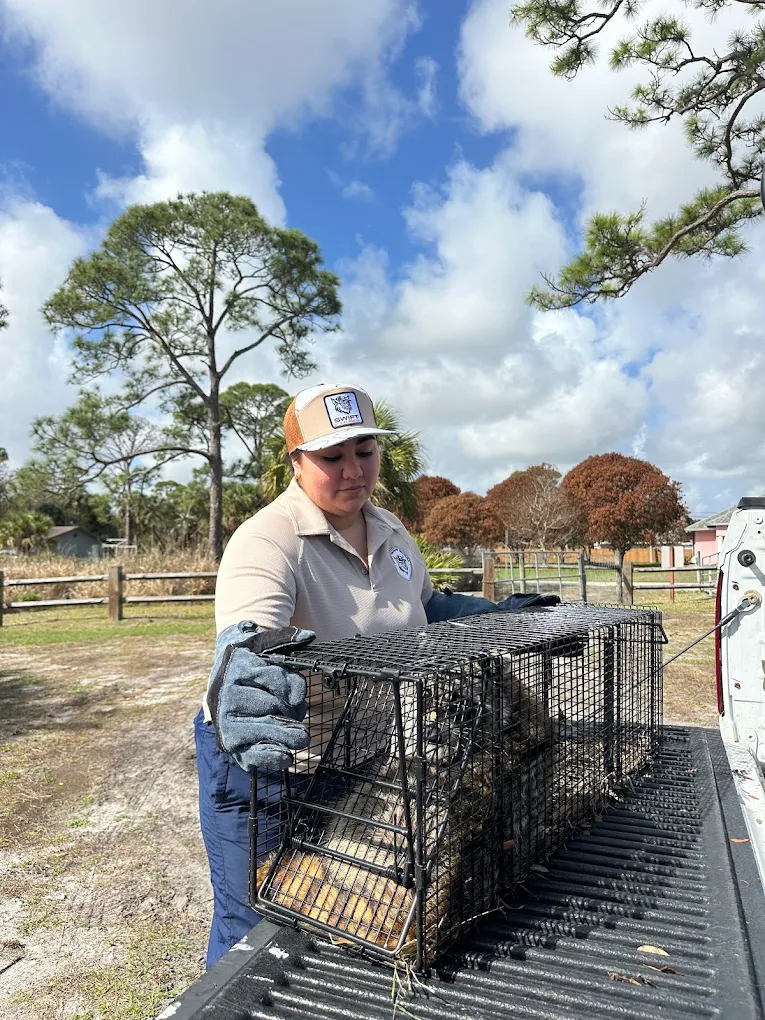
- 1
Roofline & fascia gaps
Where the roof meets the wall, salt-lifted flashing and fascia leave gaps raccoons and rats pry open onto the attic.
- 2
Soffit & eave openings
Corroded or pulled soffit panels and eave returns are a classic barrier-island entry, reached straight off the dune canopy.
- 3
Gable, roof & dryer vents
Un-screened gable, roof and dryer vents are wide-open doors for bats, rats and birds into the attic.
- 4
HVAC & utility penetrations
The dime-sized gaps around AC line-sets, plumbing and wiring — corroded by salt — are the routes rodents use into the walls.
- 5
Crawlspace & garage gaps
Ground-level crawlspace vents, deck skirts and garage thresholds let opossums, snakes and rodents in at grade.
- 6
Seawall voids & bank burrows
Voids behind the Intracoastal seawall and burrows in the bank are where iguanas and armadillos undermine the structure.
Coastal exclusion solutions
Removal clears today’s animal; exclusion is what keeps the barrier island from simply sending the next one. On an oceanfront or Intracoastal home we seal every opening in marine-grade steel and hardware cloth — built to hold against salt, storms and empty months.
Seal the roofline & vents
Soffit, fascia, ridge and vent gaps are closed in galvanized steel — the routes raccoons, rats and bats use off the dune canopy to the attic.
Screen the ground level
Crawlspace vents, deck skirts and garage gaps are screened in hardware cloth against opossums, snakes and rodents.
Pack the seawall & bank
Seawall voids and lagoon-bank burrows are packed and screened before iguanas and armadillos enlarge them.
Backed in writing
Every exclusion is documented and backed by our written re-entry guarantee — the fix holds, and you have it in hand while you’re away.
Remove, seal, verify — the barrier-island home is closed for good, even through the months you’re not there.
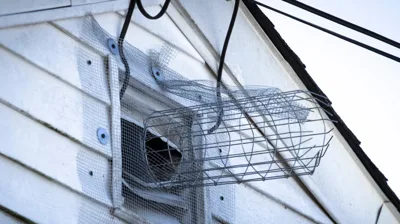 Marine-grade steel
Why property owners choose Swift
Defending a barrier-island property is different from chasing one animal. It takes local knowledge of how the ocean, dune and lagoon move wildlife, humane methods you can trust, and a fix that lasts in the salt air while you’re away.
Barrier-island expertise
We know these oceanfront condos, Intracoastal estates, dune plantings and lagoon seawalls — where wildlife actually gets in on the island.
Humane methods
Mothers and young stay together, native snakes and protected bats are handled by law, and we exclude and seal rather than poison — safe around family, pets and the water.
Seasonal-home watch
A real person answers 24/7, and we seal and check seasonal properties while owners are north — so a quiet month never becomes a colony.
Lasting, guaranteed work
We seal entries in marine-grade steel and hardware cloth and back the work in writing, built to hold against salt, storms and time.
Humane, guaranteed in writing, and built for the barrier island — the wildlife team Hutchinson Island owners trust.
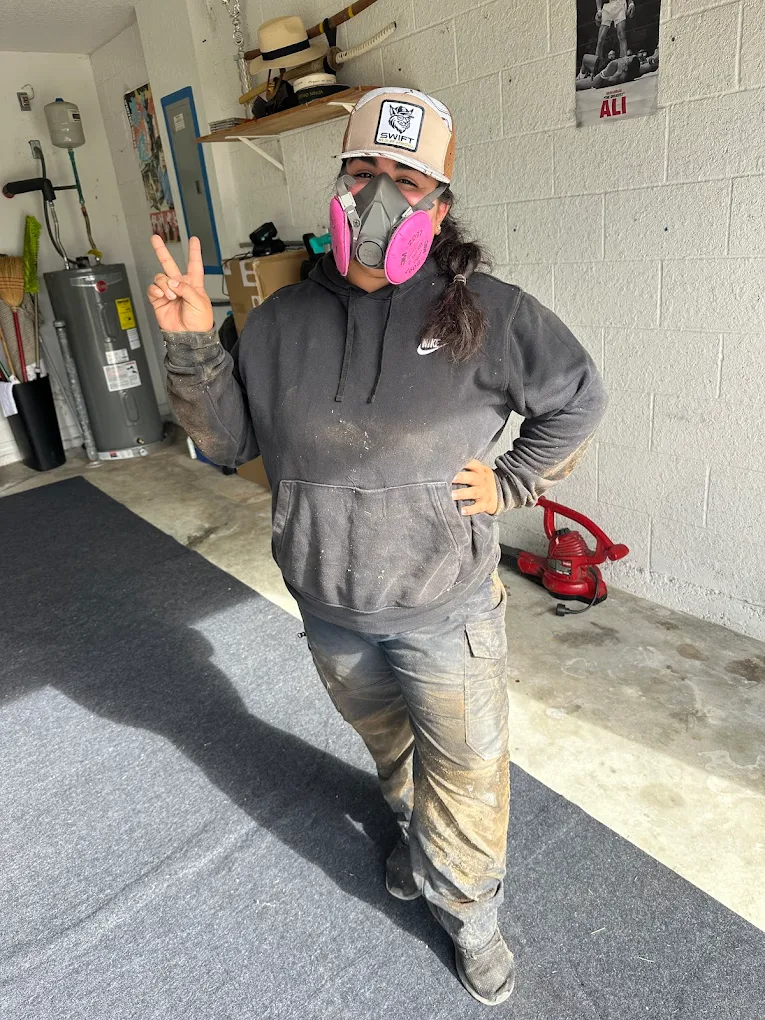
What Hutchinson Island & Treasure Coast
owners say.
⭐️⭐️⭐️⭐️⭐️ 10 Stars. Excellent service! Swift safely rescued Ursula the Raccoon and her babies. Choose Swift… you won't be disappointed!
"If you need wildlife removed the right way, call Issac! I was terrified of the raccoons sneaking around my place at night, getting into our garbage every night. Until we met Issac and his wife! They are professional, on time, and get straight to the point. Issac explained everything clearly and handled the problem fast with no stress."
"Absolutely outstanding service! The team was professional, quick, and incredibly knowledgeable. They safely removed raccoons from my property and made sure everything was secure afterward. I'm beyond impressed with their work!"
"Swift Wildlife Removal is a team of good people, very professional with removal of creatures without harming animals. They helped with raccoons in a rental property and did an excellent job! Highly recommend!"
Hutchinson Island wildlife removal — FAQ.
Quick answers — or call us 24/7 for anything else.
Do you serve all of Hutchinson Island? +
Why do barrier-island homes get so much wildlife? +
Can you protect my home while I’m away for the season? +
I’m in a condo — how is that different from a house? +
Are iguanas really a problem on the island? +
Do you use poison? +
How fast can you get to the island? +
Serving all of Hutchinson Island
Same-day, local wildlife defense across the barrier island — from Sailfish Point and Indian River Plantation to Ocean Village, Sea Winds and the MacArthur Boulevard corridor.
Get a coastal wildlife inspection.
A free, on-site inspection of your barrier-island property — the roofline, attic, lanai, crawlspace, seawall and every salt-worn penetration — with a written plan to remove what’s there and seal it out. A real person answers, 24/7 — including emergencies.
- Free, same-day on-site inspection
- Both fronts checked — ocean/dune side & Intracoastal seawall
- Written estimate & exclusion plan
- Humane removal, backed by a written guarantee