
01
Yard maintenance
Keeping grass low, trimming dense shrubs and clearing ground cover removes the shade and cover snakes rely on to move and hunt unseen.
A snake in the yard is unsettling, but it’s rarely the emergency it feels like. We identify the species, remove the snake safely and humanely, and tell you exactly what you were dealing with. Your family and pets stay protected, and you get a straight answer instead of a guess.
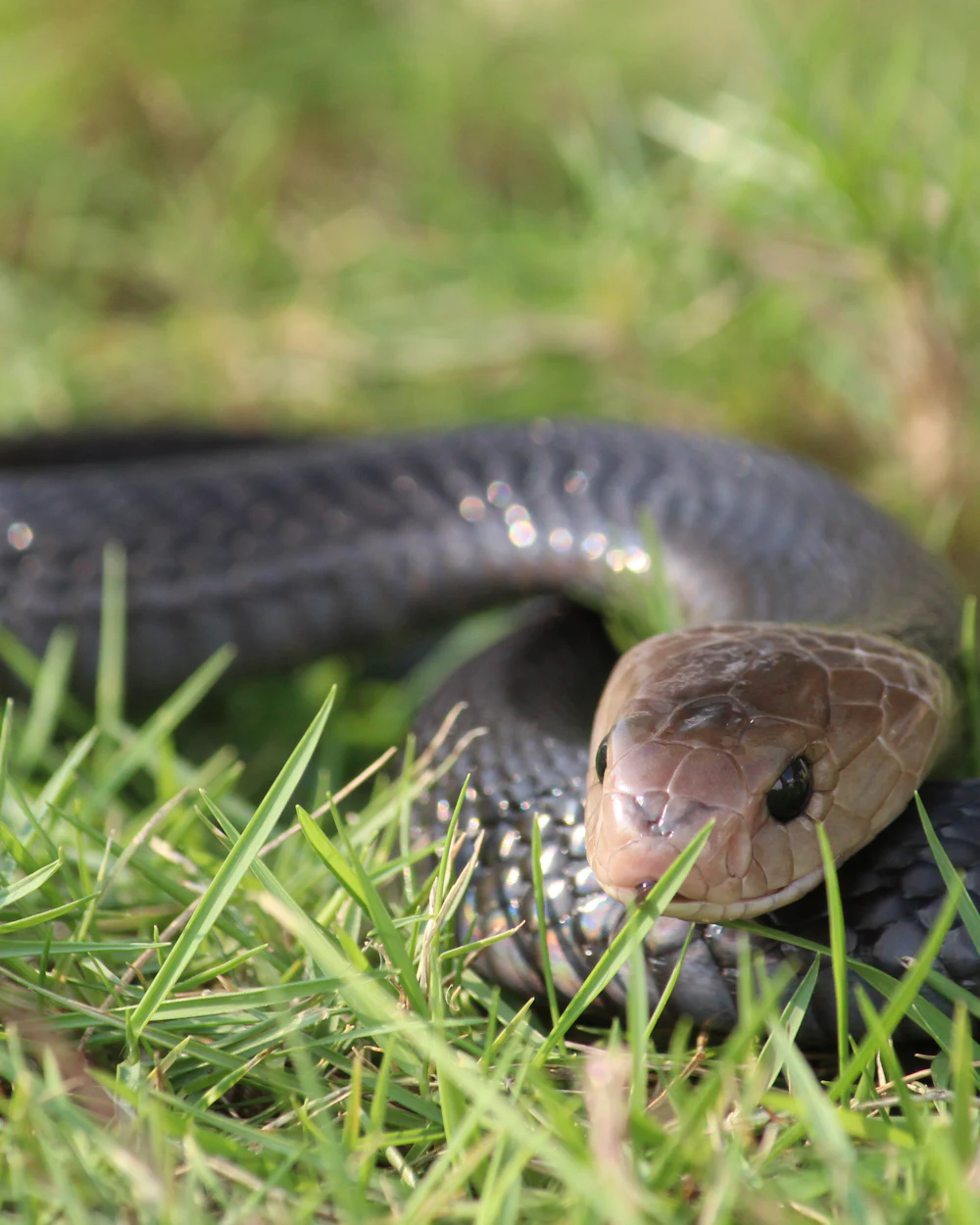
Calm, expert help.
Family & pet safety first
Here’s the first thing worth knowing: the vast majority of snakes on the Treasure Coast are non-venomous and beneficial, keeping rodents and pests in check. A snake in the yard usually says more about a healthy landscape than about any threat.
Snakes turn up in residential areas for simple reasons: they follow food and shelter. Rodents, frogs and insects draw them in. Wood piles, debris, dense plantings and damp, cool spots give them cover. Florida’s warm climate keeps them active most of the year, and homes bordering canals, preserves and lush landscaping see a little more of them.
Understanding that turns fear into a plan. Snakes aren’t seeking anyone out, and most simply move on. The real work is identification and prevention: knowing what you’re dealing with, then making the property less inviting.
The large majority of Florida snakes are non-venomous. They also keep rodent and pest numbers down.
Snakes go where the meals are: rodents, frogs and insects. Reduce those, and the yard becomes far less appealing.
Wood piles, debris, dense plantings and cool, damp spots offer the cover snakes look for by day.
Snakes don’t hunt or target people. Encounters are chance meetings, and most snakes move on if left alone.
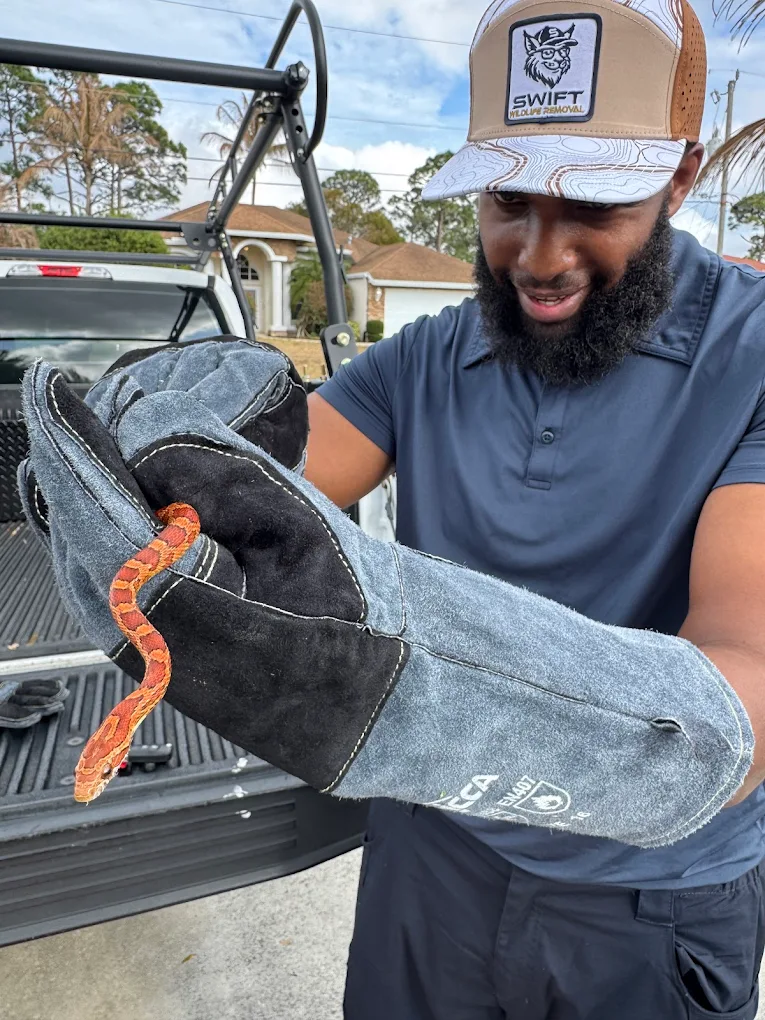
Most snakes in the open will move along on their own. Here’s how to tell when it’s worth a professional look, and when to pick up the phone right away.
One snake passing through is normal. The same spot again and again suggests it’s found food or shelter worth a look.
Never try to handle a snake inside the house, garage or lanai yourself. This is a call to make right away.
Activity around swing sets, sandboxes or play spaces is worth a professional check for peace of mind.
Curious dogs and cats are the most common way encounters escalate. If pets share the space, err toward a call.
Several harmless snakes are easily mistaken for venomous ones. When in doubt, don’t guess. Have it identified.
Warm hardscape and nearby water draw snakes to bask. Recurring activity here is worth addressing.
Quiet, cluttered storage areas are prime shelter. A snake settling in is a reason to inspect and exclude.
A steady rule of thumb: never try to handle, corner or kill a snake yourself — most bites happen during exactly those attempts. Keep your distance, keep children and pets clear, and let a professional identify and handle it.
Snakes don’t pick a yard at random. They follow food and shelter, and these six factors decide how much of each your property offers.
Rats and mice are a snake’s favorite meal. An active rodent problem is the single biggest draw.
Overgrown shrubs, tall grass and ground cover give snakes shade, cover and hunting ground.
Stacked firewood and deep mulch create cool, hidden harborage right where snakes want it.
Yard clutter, leaf litter and construction debris are ready-made shelter and a rodent magnet too.
Ponds, birdbaths, leaks and damp low spots attract the frogs and rodents snakes hunt.
Sheds, stacked containers and equipment left undisturbed become quiet, sheltered dens.
We work through it step by step, past the single snake. Lasting peace of mind comes from knowing what’s there and preventing the next visit.
We assess the property and the area of concern — where snakes are traveling, sheltering and finding food.
Correctly identifying the species turns worry into a plan. Venomous or not, you’ll know exactly what it means.
When a snake needs to be moved, an experienced technician handles it safely and humanely. Never you.
We look at what drew the snake in: food, shelter and moisture. The fix goes past the single animal.
You leave with practical, property-specific guidance to make the yard less inviting going forward.
Removing the snake is the start. What keeps snakes away is reducing what drew it in, and these three services do exactly that.
A snake in the yard, garage or lanai — and the uncertainty of what to do next.
Safe, humane removal and professional identification by an experienced technician.
A resolved encounter and the confidence of knowing exactly what you were dealing with.
The gaps, voids and harborage that let snakes shelter around the home, and sometimes inside it.
Sealing entry points and reducing the shelter that makes a property attractive.
Fewer places for snakes to hide, and a home that’s harder to get into.
The rodent activity that quietly invites snakes by providing an easy, steady food source.
Rodent control and exclusion that removes the meal drawing snakes in.
Addressing the root cause, the most effective long-term snake deterrent there is.
Real Google reviews from Treasure Coast homeowners. The same fast, professional response goes out on every call.
“In full panic mode, I called Swift Wildlife Removal, fully expecting to be put on hold. But nope — they showed up SO fast it was like they teleported. 10/10 recommend.”
“Excellent immediate professional response. Outstanding customer service, caring and an intelligent plan that allows for the humane removal of uninvited wildlife.”
“Had a great experience with them. Very professional and very knowledgeable, answering all my questions. Definitely would recommend!”
A yard with less food and shelter sees fewer snakes. It really is that direct. These changes make the biggest difference over time.
Keeping grass low, trimming dense shrubs and clearing ground cover removes the shade and cover snakes rely on to move and hunt unseen.
Rodents are the main draw, so controlling them is the most powerful thing you can do. Take away the food and the yard loses most of its appeal.
Elevate wood piles, clear debris and close up cool, damp hiding spots. Less harborage means fewer snakes deciding to stay.
Organizing sheds, raising stored items off the ground and reducing clutter takes away the undisturbed shelter snakes settle into.
A professional set of eyes catches the entry points, harborage and rodent signs a homeowner often misses. That turns guesswork into a plan.
The real value is a plan tailored to your property. That’s the difference between reacting to each sighting and steadily seeing fewer.
Calm, honest answers on venomous species, identification, family and pet safety, removal and prevention.
Usually not. The large majority of snakes in Florida are non-venomous; only a handful of species are venomous. The catch is that several harmless snakes look a lot like venomous ones, so identification really matters. Don’t guess, and don’t risk a closer look. Have a professional identify what you’re dealing with.
There are general clues, but lookalikes are common and the clues fail exactly when it counts. The safer habit is simple. Keep your distance, don’t move in for a closer look, and call a professional. Identification is part of every removal we do, so you get a confident answer without the risk.
Yes. Snakes do valuable work controlling rodents and pests, so we go with safe, humane removal wherever possible. An experienced technician handles the animal and relocates it in line with FWC guidelines. Just as important, we look at what attracted it so the encounter is less likely to repeat.
Stay calm and keep your distance. Most snakes in the open are passing through and will move on. Don’t try to catch, corner or kill it, since the majority of snakebites happen during those attempts. Keep children and pets away from the area, note where it was, and give us a call if it’s inside a structure, near play areas, or you’re unsure what it is.
In most cases a single non-venomous snake poses little threat and would rather avoid everyone. The concern is a curious pet or child getting too close, or an unidentified species. That’s why we focus on identification and prevention. Once you know what’s there, you can make informed decisions about the spaces your family uses.
We start with an inspection of the area and the property, identify the species, and safely remove the snake if one is present. From there we assess the food, shelter and moisture that drew it in, then give you prevention recommendations for your property. You end up with a plan, not just one caught snake.
Prevention comes down to removing what attracts them: controlling rodents, reducing dense vegetation and debris, managing moisture, and sealing the gaps and harborage around the home. We identify the specific factors on your property and, where helpful, pair that with exclusion. A less inviting yard is the most reliable long-term deterrent there is.
We look past the single sighting. A snake in one spot usually means food or shelter nearby, so we check the surrounding conditions: rodent activity, cover, entry points and moisture. That fuller picture is what makes prevention stick instead of being a temporary fix.
We answer the phone live and respond promptly. A snake inside a structure, activity near children or pets, or an unidentified species goes to the front of the line. Call and we’ll tell you what to do in the meantime: keep your distance and keep the area clear. A technician gets scheduled on the same call.
Yes. Beyond the initial removal and inspection, we advise on ongoing prevention and come back as needed. That matters most on properties bordering water, preserves or heavy vegetation, where snake pressure runs higher. We’re licensed and insured, and the aim is simple: a property you’re comfortable using.
Yes — that’s the call we take most often on snakes. A technician comes out, identifies the species, and catches and removes it safely, venomous or not. You don’t need to corner it or keep watching it: note the room or area where you last saw it, shut the door if you can, and call. We handle reptile removal across the Treasure Coast and relocate in line with FWC guidelines.

One sighting or a recurring problem, either way a free inspection will tell you what’s actually going on. Call us now. There’s no form to fill out.
Open 24 hours · 7 days a week · 24/7 emergency line
Dedicated local pages for every community we serve — same humane methods, licensed & insured, same-day response.