
Why skunks burrow
Skunks are natural diggers, seeking cool, dark, protected dens to rest by day and raise young. Decks, sheds and foundations offer exactly that — which is why they settle under structures rather than inside them.
Maybe it’s a musky smell by the porch, fresh digging under the deck, or the worry that the dog will get sprayed on his last trip out at night. We remove skunks calmly and humanely, without a spray and without harming the animal. Then we seal the space underneath so nothing moves back in.
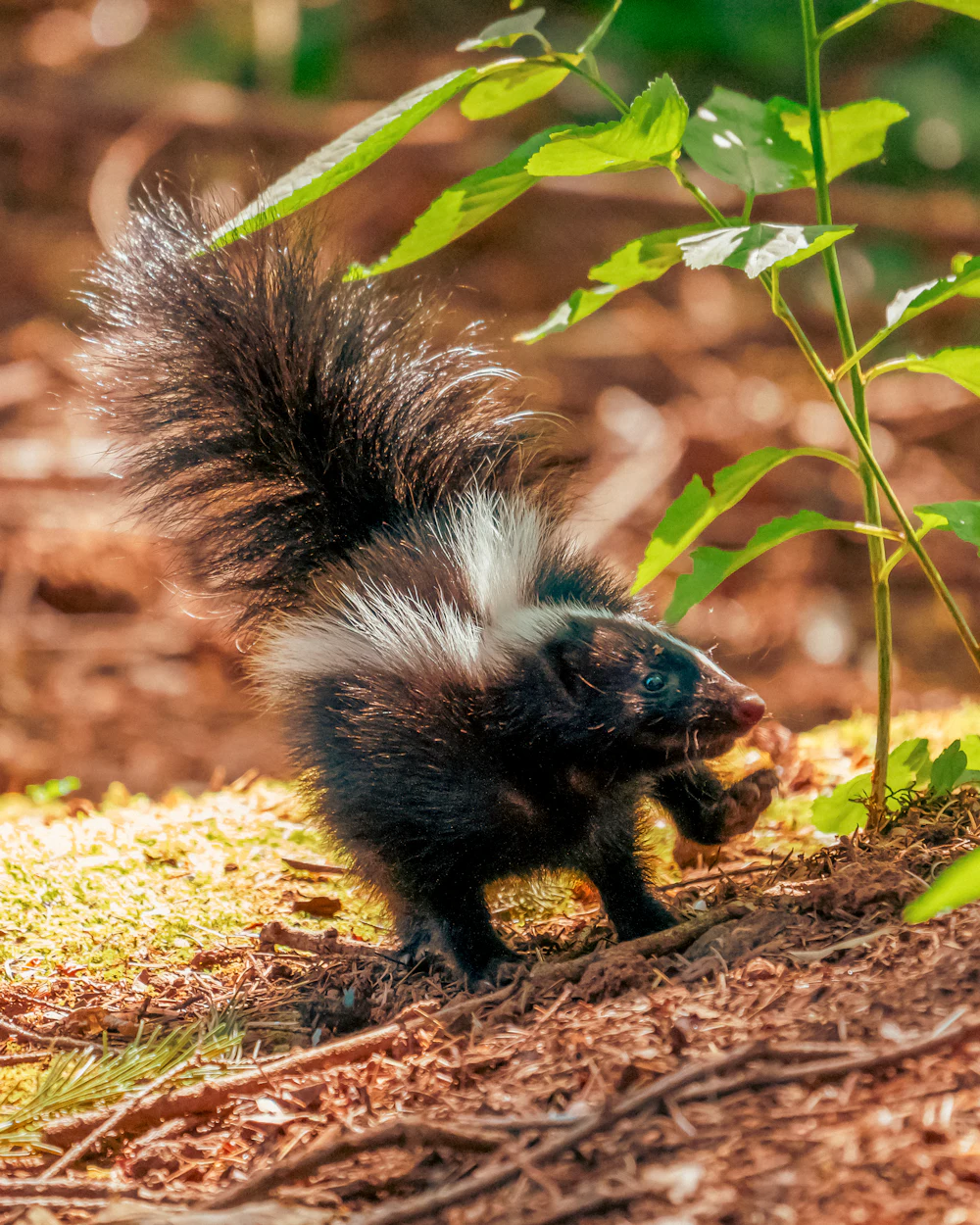
No spray. No harm.
Calm, humane removal
Skunks don’t break into houses. They settle in quietly underneath the spaces around them. These are the spots we get called to most, and how each one gets resolved.
A dark, dry, protected space with soft soil to dig — a skunk’s ideal den, right in the middle of your yard.
Odor drifting up through the boards, pets confronting them, and often a hidden litter below.
We confirm what’s living there, remove it calmly, and screen the space so it can’t be re-denned.
Undisturbed, quiet and sheltered from weather — exactly the kind of spot a skunk settles into.
Burrowing beside stored belongings and slow undermining of the structure above.
Humane removal followed by a dig-proof barrier around and beneath the shed.
Close to the house yet tucked out of sight, with easy digging and a warm, hidden retreat.
Musky odor right by your entryway and startling encounters by the door after dark.
Gentle removal and careful sealing of the porch perimeter to keep it clear.
Skunks dig along foundations for warmth, cover and an easy, sheltered place to rest.
Disturbed soil, moisture pathways against the structure and repeat digging.
Removal, backfill and foundation-line prevention that closes the invitation.
Skunks are nocturnal foragers, crossing yards after dark in search of grubs and food.
Surprise run-ins with pets and family, and the constant worry of a spray.
We figure out what’s drawing them in and resolve it before a conflict happens.
A skunk under the deck isn’t out to get anyone. It’s a wild animal that wandered too close looking for shelter. Handle it calmly and correctly, and almost every skunk situation ends without a single spray and without harm to the animal or your family.
Humane by default. That’s how Issac and Ella have run things from day one.
Skunks spray only when frightened and cornered. Calm, unhurried handling is what keeps a removal spray-free.
Low-stress handling protects the animal and keeps things quiet. A skunk removal shouldn’t turn into a backyard spectacle.
Dens often hide a litter. We check first and keep families together rather than sealing babies in.
Relocation and prevention come before harm. It’s the right thing for the animal and your property alike.
Pets and people stay clear of the work area from start to finish. That, more than anything, is what keeps a skunk job uneventful.
Remove the skunk humanely, close off the way in, and protect the space it was using. Each part matters. Skip one, and the problem tends to come back.
A skunk has denned under your deck, shed or porch, and the smell is starting to reach the house.
Humane, low-stress removal that avoids spraying and carefully accounts for any young.
The skunk gone, no spray, and no lingering smell in the yard.
The open gaps and soft dig points that let a skunk, or the next animal, move in underneath.
Buried barriers, screening and sealing engineered specifically to stop burrowing and re-entry.
A property skunks simply can’t re-den beneath.
The vulnerable voids beneath decks, sheds and crawlspaces that wildlife treats as open shelter.
Dig-proof barriers plus cleanup and remediation of the spaces skunks target most.
Your under-structure protected, restored and off-limits to wildlife.
The point isn’t only getting the skunk out. It’s being able to send the kids and the dog into the yard at night without a second thought.
Kids and pets back on the deck, with no den in the shadows beneath it.
Storage and workspace reclaimed, burrow-free.
Clean, sealed and closed to wildlife.
Soil and structure protected along the base of the home.
Beds and borders enjoyed again, even after dark.
Real Google reviews from homeowners we’ve helped — with the same humane, unhurried care we bring to every skunk call.
“Excellent immediate professional response. Outstanding customer service, caring and an intelligent plan that allows for the humane removal of uninvited wildlife.”
“Absolutely outstanding service! The team was professional, quick and incredibly knowledgeable. They safely removed the problem from my property and made sure everything was secure afterward.”
“Ella and Issac are absolutely wonderful — polite, courteous and very professional. They explained everything they were doing and clearly care about doing it the right way.”
A little understanding takes the worry out of it. Here’s what’s really going on beneath the deck — and how to stay ahead of it.
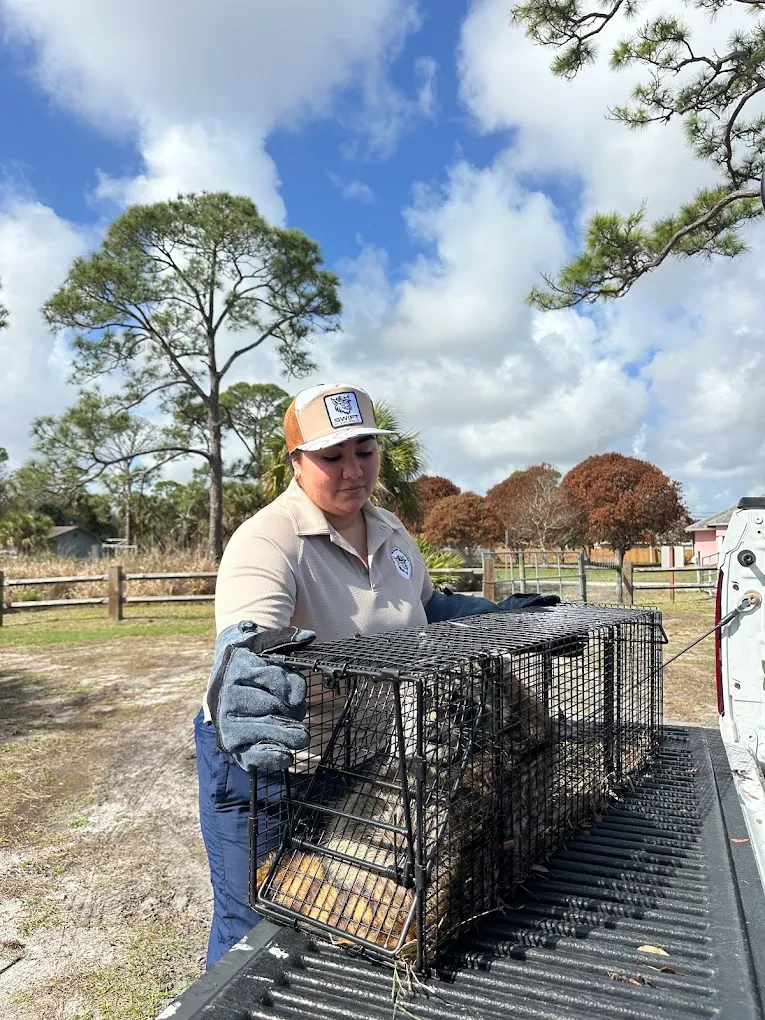
Skunks are natural diggers, seeking cool, dark, protected dens to rest by day and raise young. Decks, sheds and foundations offer exactly that — which is why they settle under structures rather than inside them.
Activity peaks in spring denning season and again as young disperse. In Florida’s mild climate skunks stay active much of the year, most visible foraging across yards on warm evenings.
Skunks forage for grubs, insects, pet food and fallen fruit. A yard rich in these is a nightly invitation, so reducing them is one of the simplest and most effective deterrents.
Most spray incidents happen when a curious dog corners a skunk. Know that skunks move around after dark, give them room, and you avoid the large majority of encounters.
A lingering musky smell, even without a direct spray, often signals a den nearby. Skunks also scent-mark, so a persistent odor is a good reason to have the property checked.
Sealing under-structure gaps, securing food and screening dig points before a skunk settles in is far easier than removing an established den. It’s less stressful for everyone, the skunk included.
For local service details, see skunk removal in Indian River Estates and skunk removal in Ocean Breeze.
The reassuring answers homeowners look for before that first call.
Yes, humane handling is central to how we work. Skunks spray only when they feel cornered, so calm, patient methods let us remove them without a spray and without harm. We’d rather take an extra half hour than stress the animal or your household.
We start by confirming a skunk is denning there and checking for young, then remove it calmly and screen the space beneath the deck so it can’t be re-denned. Under-deck situations are one of the most common calls we get, and handling the exclusion afterward is what keeps it resolved for good.
It’s the first thing everyone worries about — and the reason we work slowly and quietly. Skunks give clear warning signs and only spray when startled or trapped, so an unhurried, experienced approach avoids spraying in the vast majority of removals. Rushing or cornering a skunk is exactly what we’re trained not to do.
It’s common in denning season, so we always check before removing anything. When there’s a litter we keep the family together through the process rather than sealing the young inside — separating a mother from her babies is both inhumane and something that creates a much worse problem down the line.
A lingering musky odor usually points to a den or scent-marking nearby rather than a one-time spray. You have to find and remove the source; masking the smell doesn’t work. Once the skunk is gone and the area is treated, the odor fades on its own, and sealing the space keeps a new skunk from bringing it back.
Prevention is about removing both the access and the invitation. We install buried, dig-proof barriers around decks, sheds and foundations, and advise on food sources and landscaping that attract skunks. Pairing removal with exclusion is what turns a one-time visit into a lasting solution.
Skunks are generally non-aggressive and would rather avoid you. Run-ins with dogs are the main spray risk, and like any wild mammal, a skunk shouldn’t be handled. Keep pets in at night if you suspect a den, and have it professionally removed.
Yes. Beyond removing the skunk, we handle the burrow itself: backfilling, cleaning up the affected void, and remediating the crawlspace or under-deck area where needed. Then we seal it against future digging so the space stays protected, not just emptied out.
We answer live and schedule inspections promptly. An active den only gets more established the longer it sits, and in season the odds of a litter go up. Call and we’ll get you on the schedule and tell you what to do in the meantime to avoid a spray incident.
Usually, yes. A single denning skunk is often a female preparing a litter, and the burrow she digs invites repeat use by other wildlife. Handling it early and humanely, with proper exclusion, is far simpler than waiting until there are babies, odor and structural digging to deal with.

We’ll get the skunk out without a spray and leave your yard the way it should be. Call us or book a free inspection, whichever suits you. There’s no form to fill out.
Open 24 hours · 7 days a week · 24/7 emergency line