
Sign No.01
Damage on one elevation only
Squirrel entry on these rural lots almost always appears on the side facing the oak hammock or fence line, not on the open pasture side.
Every structure on the parcel gets covered — house, barn, pole building, garage — because the open gable end of an outbuilding is usually where Winter Beach squirrels get in. We remove the animals alive and screen each opening in galvanized cloth.
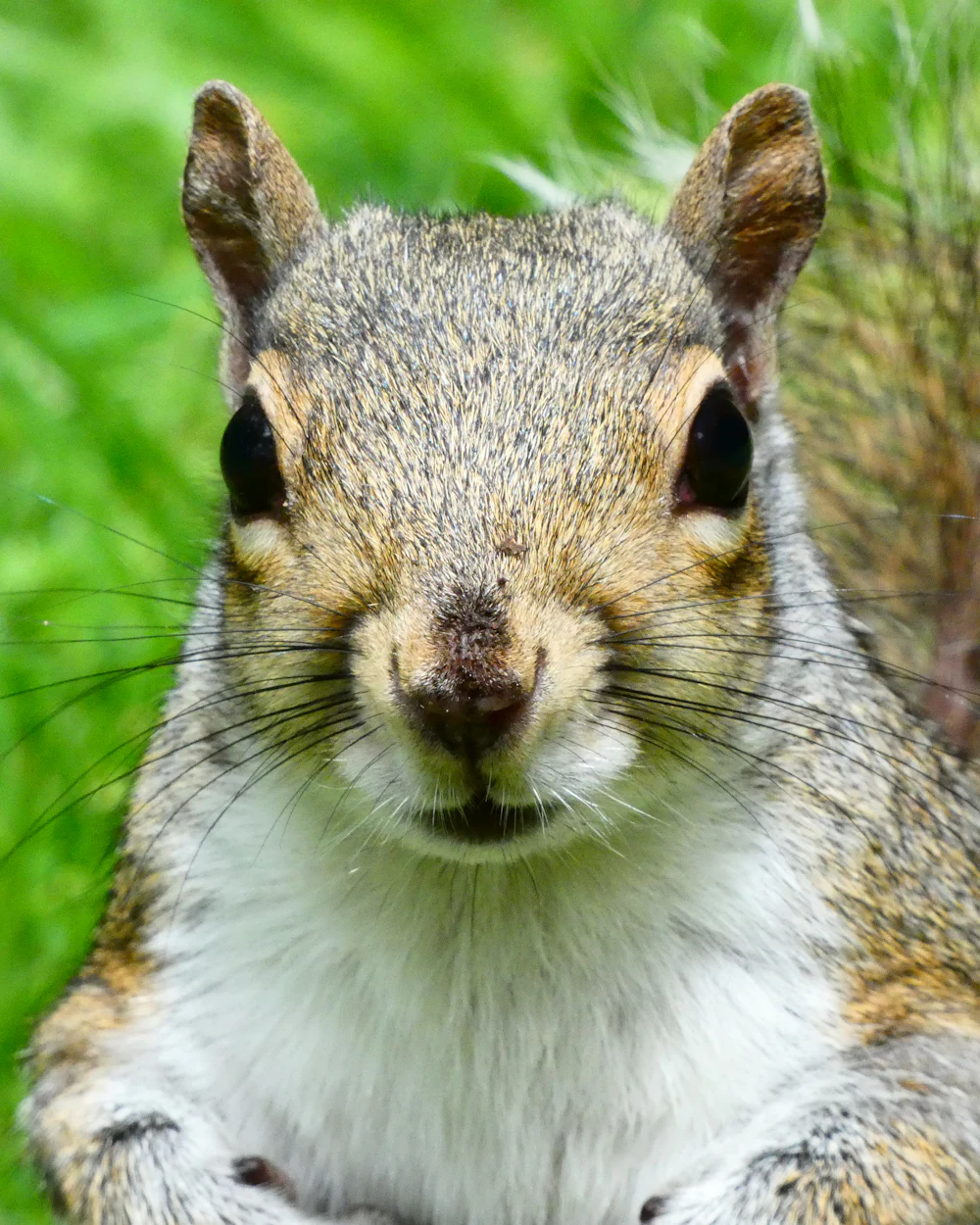
Out on the pasture parcels off 65th Street, oak hammock follows the fence lines, and squirrels follow the hammock onto house and barn roofs alike. Squirrel removal in Winter Beach covers every structure on a property, because the open gable end of a barn or pole building is usually the first way in.
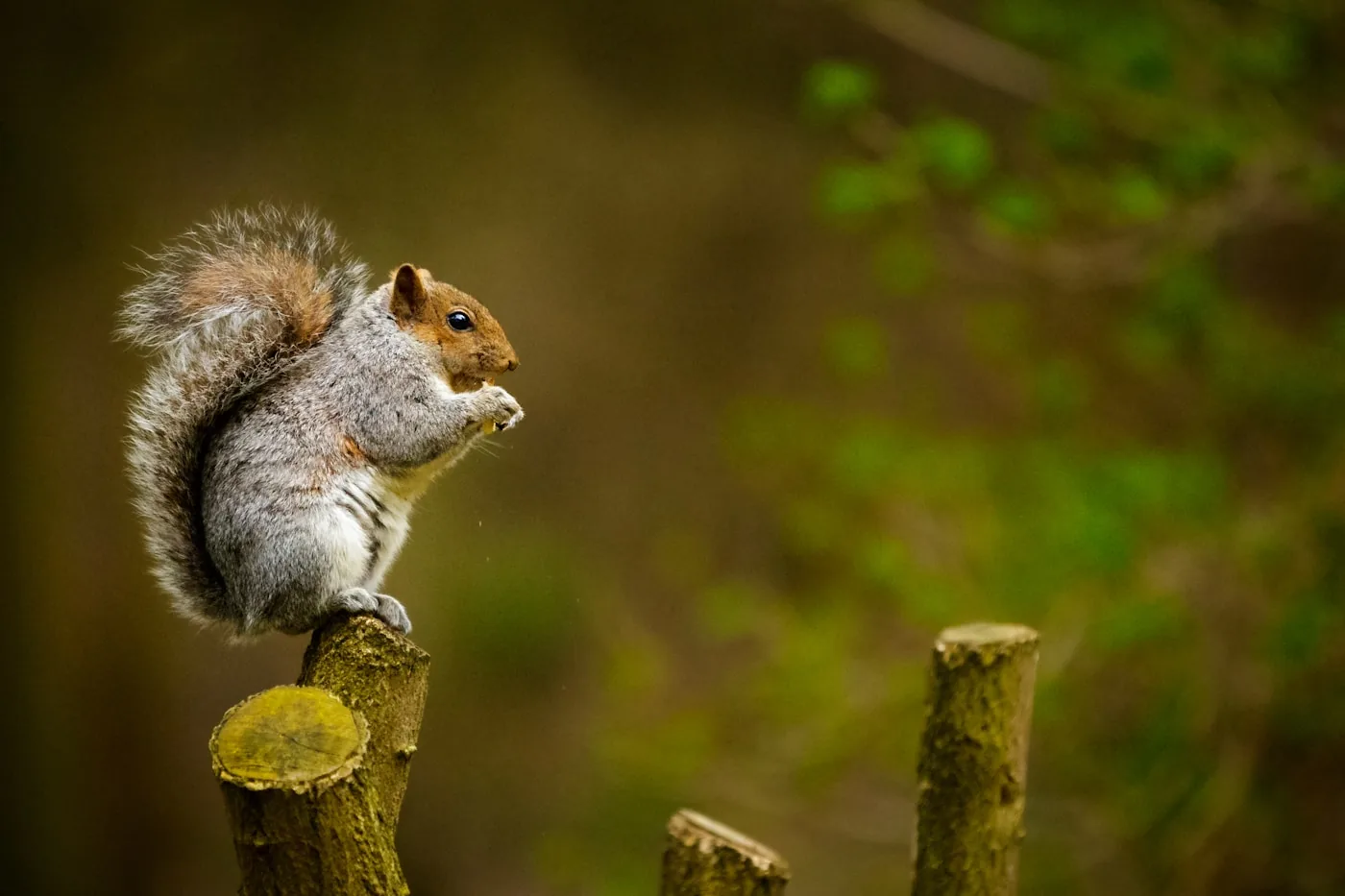
Homes here sit on larger, open parcels along 65th Street and Old Dixie Highway, most with a barn, pole building or detached garage beside them. Oak hammock edges trace the fence lines and the relief canals, delivering squirrels to one specific corner of a property rather than to a whole street, generally the side facing the tree line.
In open country a squirrel’s route is narrow and predictable: a hammock oak, then a fence line, then one roof. Inside, it nests near the gable end, caches acorns in the insulation, and keeps chewing at the opening and whatever else is handy, wiring in pole buildings included.
On a Winter Beach property these are the first warning signs to catch — around the pasture edge, the outbuildings and the home.
Squirrel entry on these rural lots almost always appears on the side facing the oak hammock or fence line, not on the open pasture side.
Barns and pole buildings carry unscreened gable openings, and a gnawed or enlarged louver there is the usual point of entry.
A worn top rail or wire along the hammock fence line marks the crossing route, and it points straight at the building they are using.
Left unaddressed, squirrels reach the parts of a rural property that are costliest to restore — across more than one structure. Here’s what’s at stake.
Runs stapled along exposed purlins sit exactly where squirrels nest, and a chewed conductor in a barn is a fire waiting on a dry week.
An unscreened barn louver gets gnawed larger each season, and the same hole then admits rain, birds and whatever else follows the squirrel.
Entry on these parcels concentrates on the side facing the oak hammock or fence line, so that one wall takes years of repeated chewing.
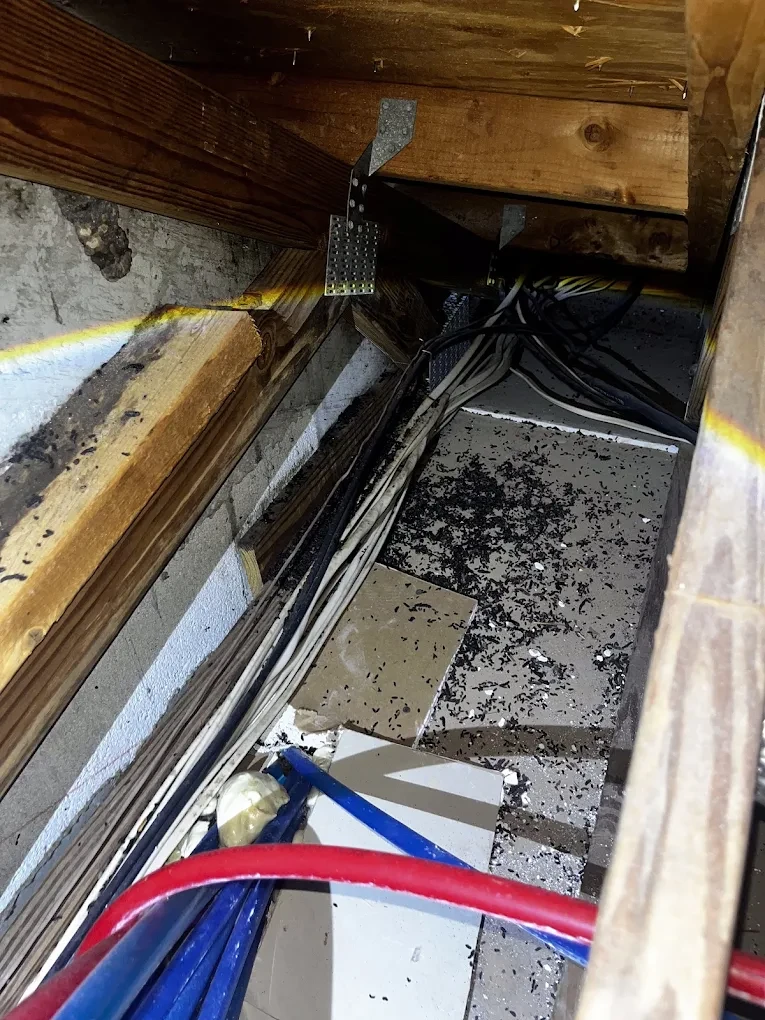
Cool, dry winter weather pushes squirrels off exposed hammock nests and into attics and barn lofts, and on parcels this size they take whichever roof sits nearest the tree line. Late-summer storms along the relief canals open fresh roofline gaps just as the second litter needs a cavity, and fall acorn drop off the hammock edges brings the caching noise.
Cool, dry weather pushes squirrels off exposed hammock nests into whichever attic or barn loft sits nearest the tree line.
Storms along the relief canals open fresh roofline gaps just as the second litter of the year needs a cavity.
Acorn drop off the hammock edges brings the caching traffic, and with it noise in insulation and loft corners.
A clear, humane sequence — inspect, remove, seal and monitor — documented across the whole property.
We trace entry to gable vents, soffit returns and roof joints — usually more than one point — and check for young.
One-way doors let squirrels leave to forage but not return; families with young get full-family removal.
Every entry is sealed with galvanized steel flashing — squirrels chew aluminum but not steel.
We remove the nest, document any chewed wiring, and clean the affected area.
Removing the squirrel is half the work. These measures keep the next one off your Winter Beach property — worked across the whole lot.
every exclusion we install is backed by our written re-entry guarantee.
⭐️⭐️⭐️⭐️⭐️ 10 Stars. Excellent service! Swift safely rescued Ursula the Raccoon and her babies. Choose Swift… you won't be disappointed!
"If you need wildlife removed the right way, call Issac! I was terrified of the raccoons sneaking around my place at night, getting into our garbage every night. Until we met Issac and his wife! They are professional, on time, and get straight to the point. Issac explained everything clearly and handled the problem fast with no stress."
"Absolutely outstanding service! The team was professional, quick, and incredibly knowledgeable. They safely removed raccoons from my property and made sure everything was secure afterward. I'm beyond impressed with their work!"
"Swift Wildlife Removal is a team of good people, very professional with removal of creatures without harming animals. They helped with raccoons in a rental property and did an excellent job! Highly recommend!"
Quick answers — or call us 24/7 for anything else.
Looking for something else? See all wildlife removal services in Winter Beach.
Humane, same-day squirrel removal across Winter Beach — the rural mainland community north of Vero Beach, from the 65th Street area and Old Dixie Highway to the Indian River Boulevard lots.
A no-obligation, whole-property survey of your Winter Beach lot — the pasture edge and fence rows, the barn, sheds and garage, and the home’s roofline and foundation — with a photo-documented findings ledger and a written protection plan. A real person answers, 24/7.