
Sign 01
Nesting in palm frond skirts
Fibrous debris dropping from an untrimmed cabbage palm beside the house often means squirrels are living in the dead frond skirt.
River humidity softens fascia and crawl-vent screen on Roseland’s older cottages, and squirrels find both. We take the animals out of the attic or crawl space, screen those vents in steel, and strip the dead frond skirts and hammock limbs feeding the roof.
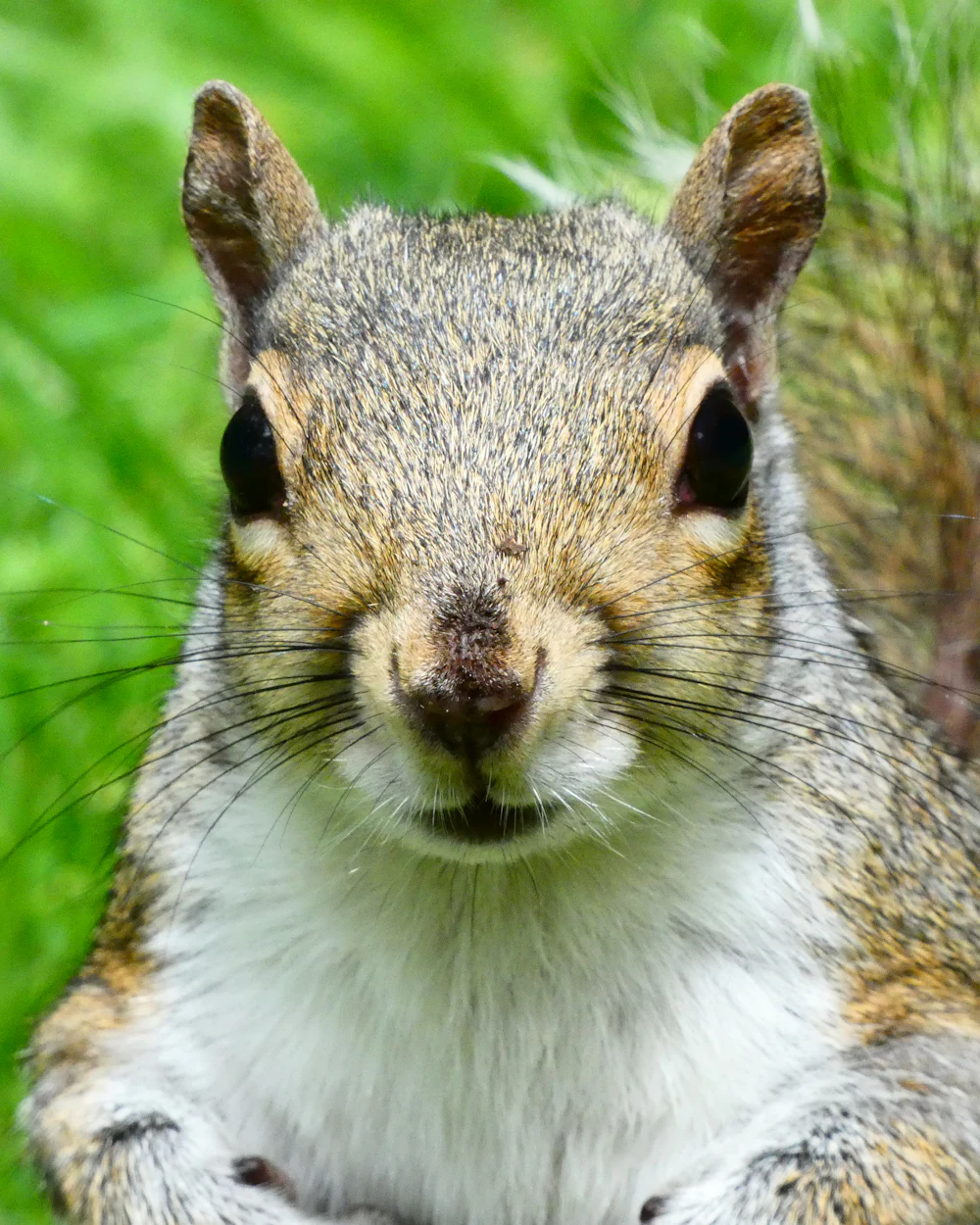
Cabbage palms along the St. Sebastian River hold dead frond skirts that squirrels nest in, and the riverside oak hammock carries them the rest of the way to a roof. Squirrel removal in Roseland covers all three parts: the animals in the attic, the entry point they cut, and the limbs feeding the problem.
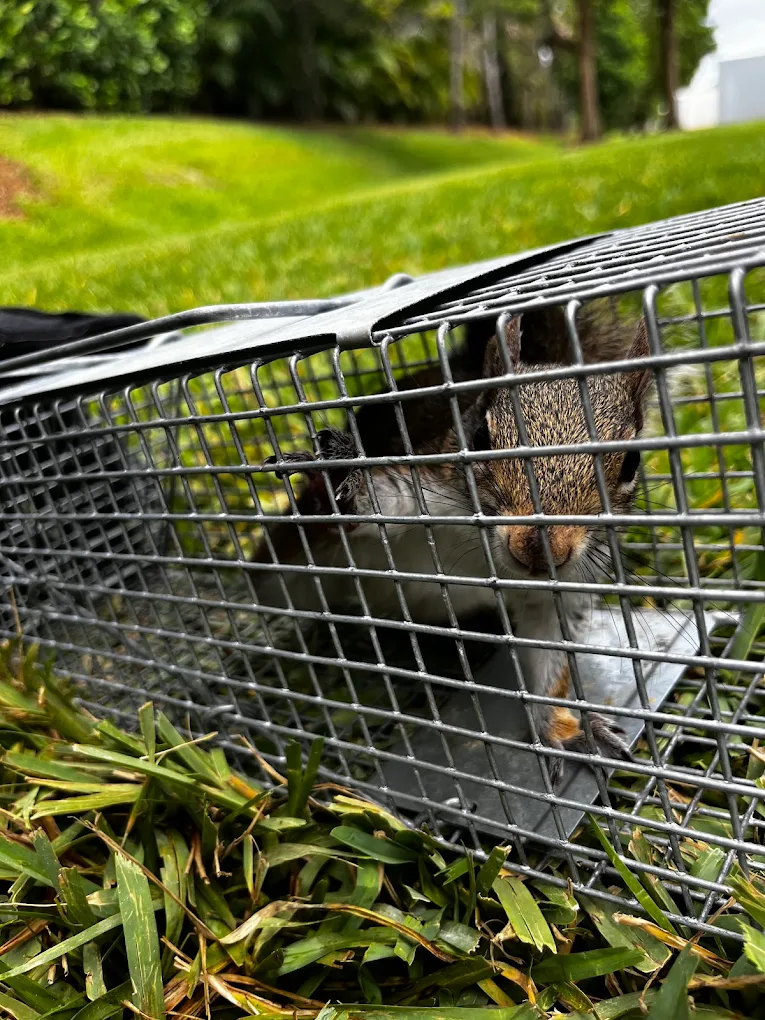
Roseland runs to older riverside cottages and later additions near Bay Street and the US-1 corridor, with wood fascia, vented crawl spaces and gable ends facing the trees. Oak and cabbage-palm canopy off St. Sebastian River Preserve State Park comes right to the eaves on many of those lots, so squirrel pressure is constant.
Squirrels nest outdoors in palm skirts and oak leaf dreys long before they try a house, then shift indoors when a litter is due or a storm strips the tree. They travel along limbs and fence tops, and once inside they gnaw the entry wider and cache acorns down in the insulation.
On a Roseland riverside lot these are the first signs to watch for — around the roofline, the landscaping and the water’s edge.
Fibrous debris dropping from an untrimmed cabbage palm beside the house often means squirrels are living in the dead frond skirt.
Older riverside cottages here have vented crawl spaces, and a chewed screen at ground level shows squirrels working the structure from below.
A worn, pale patch where a fence line meets a riverside oak marks the crossing squirrels use between the hammock and your roof.
Left unaddressed, squirrels reach the parts of a riverside home that are costliest to restore. Here’s what’s at stake.
Squirrels do not stop gnawing once inside, and older Roseland cottages carry wiring runs never meant to sit within reach of one.
A chewed vent screen at ground level lets squirrels, and then damp river air, into the crawl area of a raised cottage.
Wood fascia and drip edge softened by river humidity give way easily, and one gnawed corner becomes an entry the whole hammock population uses.
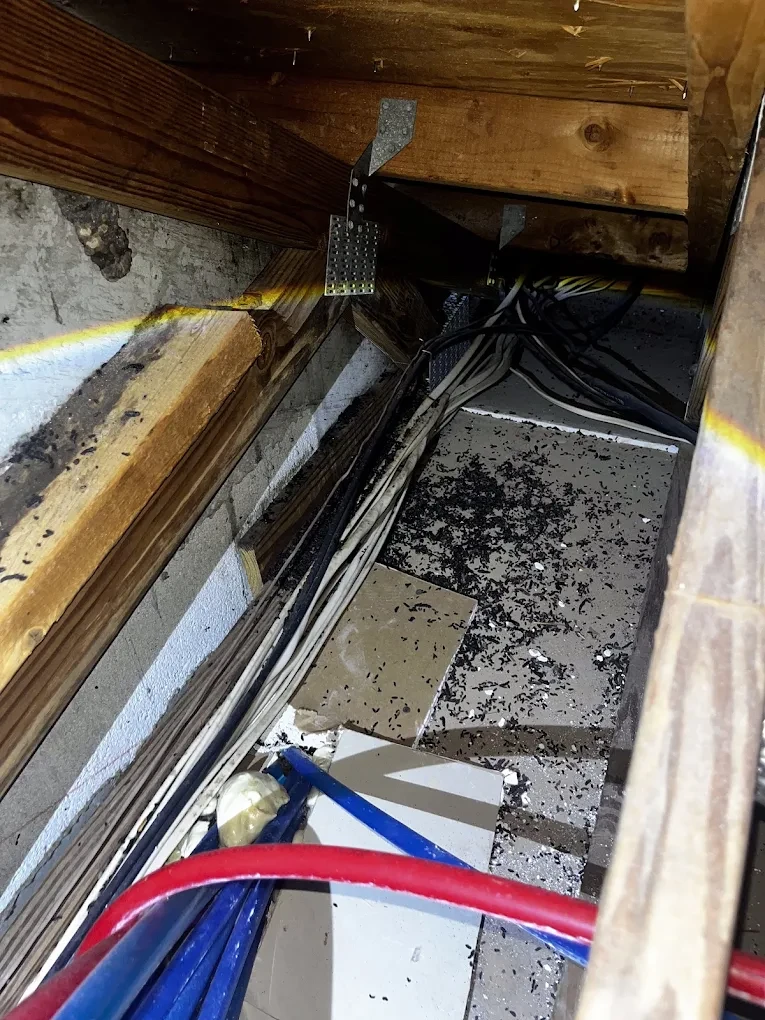
Cold snaps are the local trigger. They strip exposed palm skirts and dreys of shelter and push squirrels into any roof cavity within reach, which is why a January noise complaint is normal here even though nesting proper concentrates in late winter and again at the end of summer. Late-summer litters tend to follow storm damage along the river.
Cold snaps strip shelter from palm skirts and dreys, pushing squirrels into roof cavities just as the first litter is due.
The second litter arrives after storms tear frond skirts and loosen fascia along the river, so new entries and new young coincide.
Preserve land across the water keeps a steady supply coming, which is why sealing the roofline matters more than the trapping does.
A clear, humane sequence — read the habitat, remove, seal and guarantee — documented from first call to follow-up.
We trace entry to gable vents, soffit returns and roof joints — usually more than one point — and check for young.
One-way doors let squirrels leave to forage but not return; families with young get full-family removal.
Every entry is sealed with galvanized steel flashing — squirrels chew aluminum but not steel.
We remove the nest, document any chewed wiring, and clean the affected area.
Removing the squirrel is half the work. These measures keep the next one out of your Roseland home — worked with the habitat, not against it.
every exclusion we install is backed by our written re-entry guarantee.
⭐️⭐️⭐️⭐️⭐️ 10 Stars. Excellent service! Swift safely rescued Ursula the Raccoon and her babies. Choose Swift… you won't be disappointed!
"If you need wildlife removed the right way, call Issac! I was terrified of the raccoons sneaking around my place at night, getting into our garbage every night. Until we met Issac and his wife! They are professional, on time, and get straight to the point. Issac explained everything clearly and handled the problem fast with no stress."
"Absolutely outstanding service! The team was professional, quick, and incredibly knowledgeable. They safely removed raccoons from my property and made sure everything was secure afterward. I'm beyond impressed with their work!"
"Swift Wildlife Removal is a team of good people, very professional with removal of creatures without harming animals. They helped with raccoons in a rental property and did an excellent job! Highly recommend!"
Quick answers — or call us 24/7 for anything else.
Looking for something else? See all wildlife removal services in Roseland.
Humane, same-day squirrel removal across Roseland — the quiet riverside community along the St. Sebastian River, from the Sebastian River area and Bay Street to the US-1 corridor.
A no-obligation, habitat-edge survey of your Roseland property — the riverbank and frontage, the hammock canopy, the yard and outbuildings, and the roofline, vents and foundation — with a photo-documented corridor map and a written protection plan. A real person answers, 24/7.