
Sign 01
Cone-shaped holes in shaded turf
The moist, hammock-shaded lawn shows fresh overnight divots, since the soft, leaf-fed soil along the St. Sebastian River keeps grubs within easy reach of a rooting armadillo.
Armadillo trapping and burrow control for Roseland yards — we remove the diggers with directional trapping (bait won’t work), close the burrows, and protect the lawns, beds, banks and foundations they undermine on a wooded riverside lot.
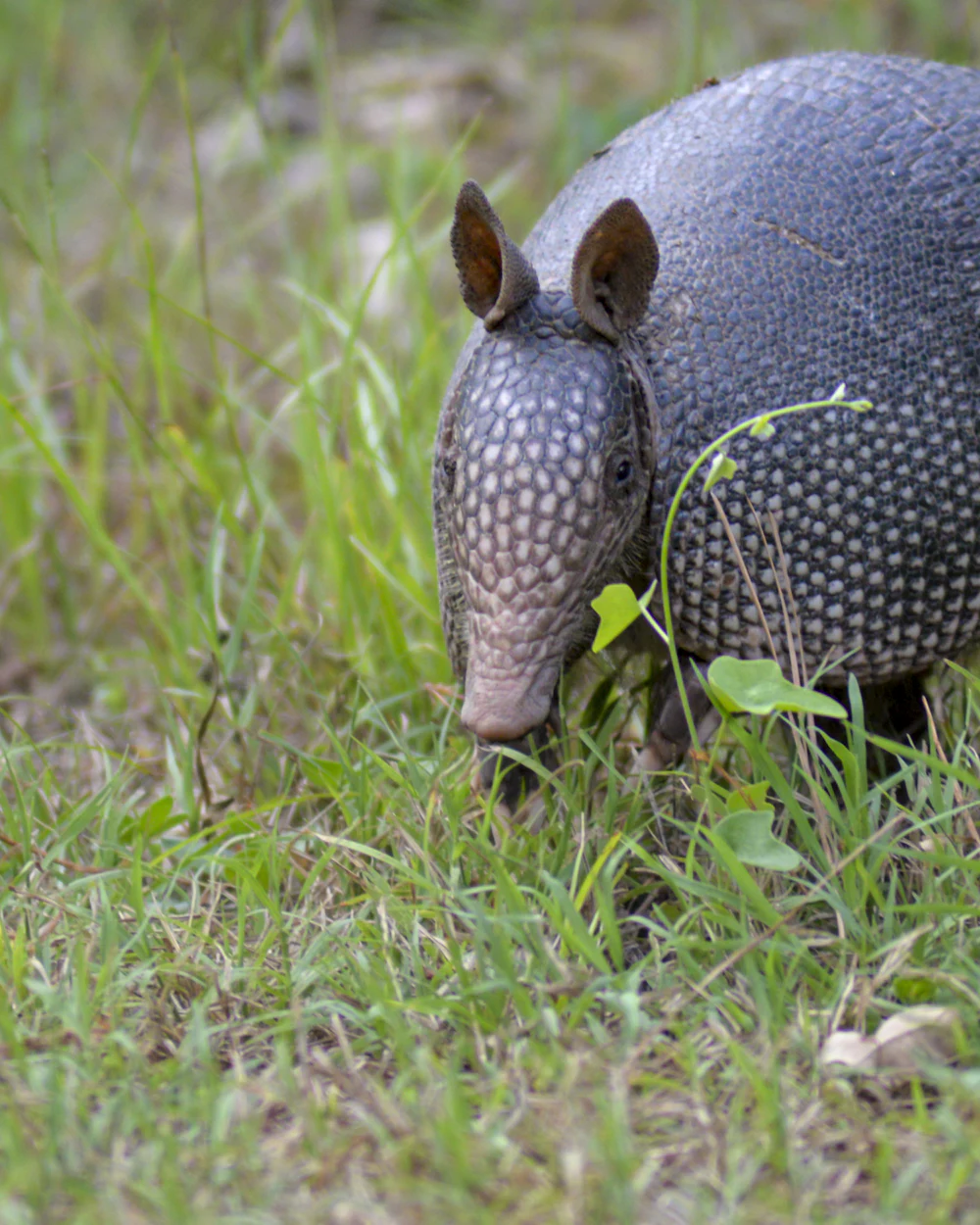
Roseland is a quiet riverside community near Sebastian, shaded by oak and cabbage-palm hammock along the St. Sebastian River, where soft, moist ground draws armadillos in to root for grubs. Our armadillo removal service finds the digging animal, removes it humanely and seals its burrows so your wooded lot stops turning over at night.
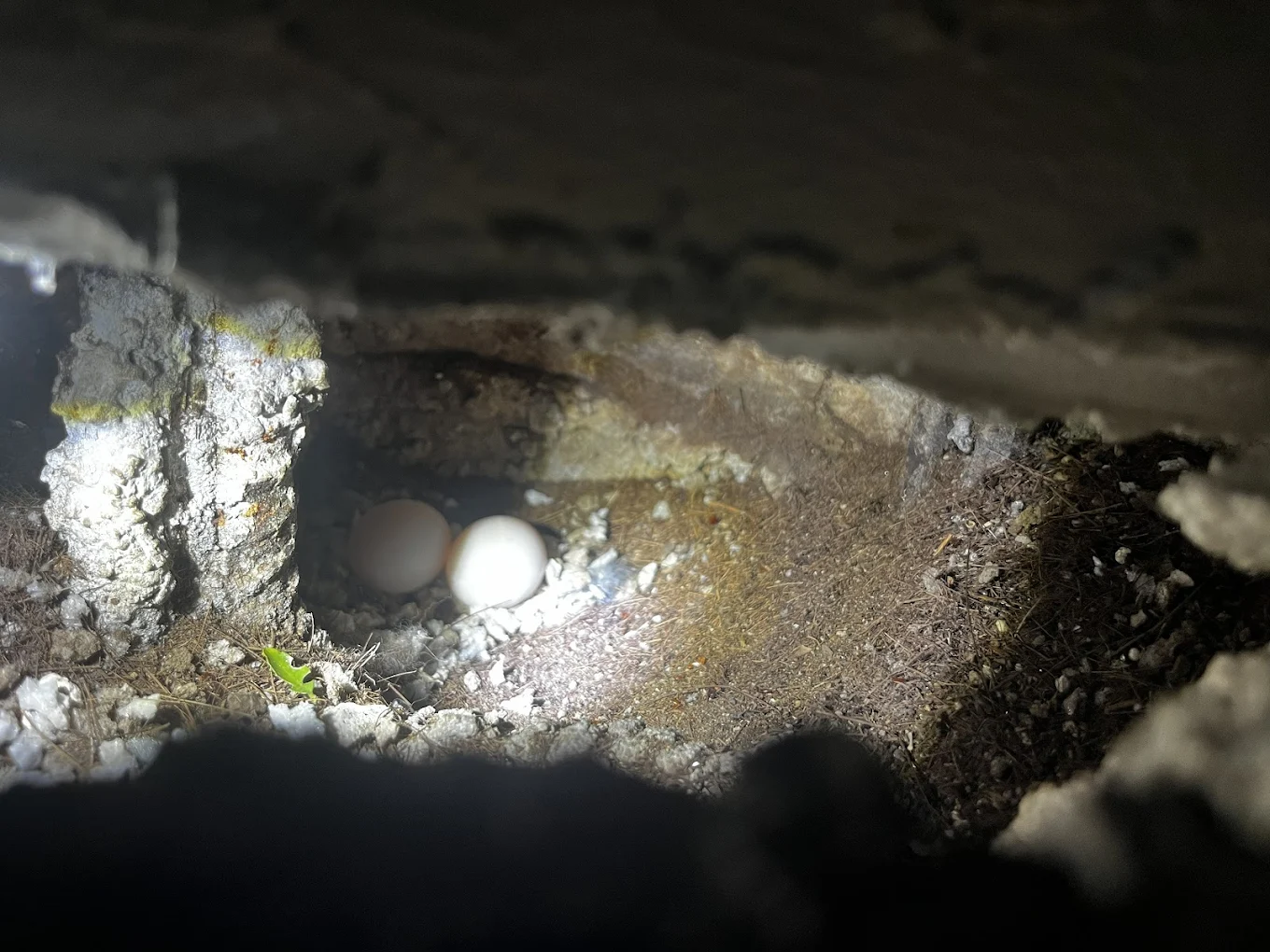
The oak and cabbage-palm hammock along the St. Sebastian River keeps Roseland’s generous lots shaded and moist, and that damp, leaf-fed soil holds heavy grub populations. With hammock cover running right up to the houses, an armadillo has soft, well-stocked foraging ground and plenty of hiding places within a short nightly wander.
Rooting the shaded turf all night for grubs, it leaves cone-shaped holes and then excavates a den in a firm bank or footing. Along the riverbank and against slabs and sheds it can drive a long tunnel that undermines the structure, while its rooting spreads through the shaded lawn and hammock-edge beds.
On a Roseland riverside lot these are the first signs to watch for — around the roofline, the landscaping and the water’s edge.
The moist, hammock-shaded lawn shows fresh overnight divots, since the soft, leaf-fed soil along the St. Sebastian River keeps grubs within easy reach of a rooting armadillo.
A rounded tunnel opening appears beside a foundation, shed or the river-side bank, with a fan of loose sandy spoil pushed out at the entrance.
The plantings where the lawn meets the oak and cabbage-palm hammock look disturbed each morning, with mulch flipped and roots worked loose as the armadillo digs for grubs.
Left unaddressed, armadillos reach the parts of a riverside home that are costliest to restore. Here’s what’s at stake.
Armadillos root for grubs by smell, and the soft, moist soil of a riverside lot lets a single animal tear up turf, beds and banks in a few nights.
Their burrows undermine foundations, slabs, sheds and riverbanks — a structural problem that starts as a hole at the edge of the concrete or bank.
Because they hunt underground by scent, baited traps fail; the digging continues until directional trapping removes the actual animal.
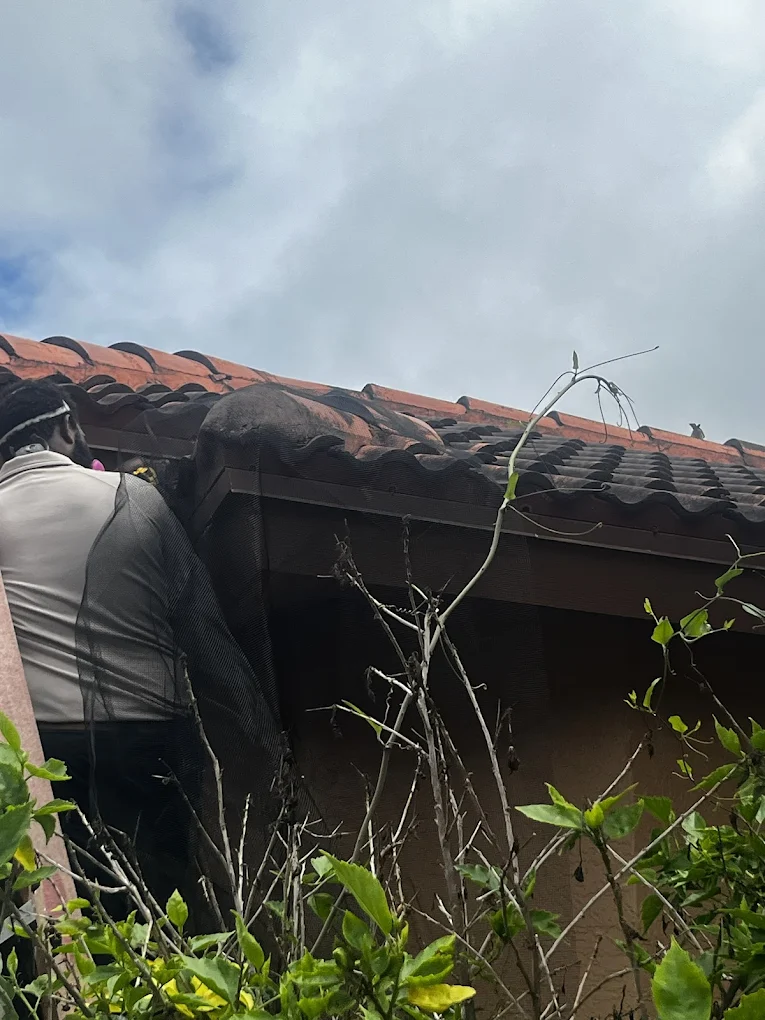
Along the river the digging runs high through the warm months and surges after summer rains soften the shaded ground and push grubs to the surface. Armadillos forage nearly year-round in this mild climate, so a lot cleared in the cooler weeks can be rooted again once the rains return and the hammock soil resoftens.
Peak digging as warm, moist soil keeps grubs near the surface across the wooded lot.
Nightly rooting runs hardest; riverbank and foundation burrows expand.
Digging eases in the coolest weeks, then resumes as the ground warms.
A clear, humane sequence — read the habitat, remove, seal and guarantee — documented from first call to follow-up.
We identify active burrows and travel routes and evaluate any structural risk to slabs and foundations.
Traps are placed and funneled along the armadillo’s own paths — the technique that actually catches trap-shy diggers.
Once removed, burrows near structures are collapsed and blocked to prevent re-denning.
We advise on grub control and barrier options so the yard stops being a feeding ground.
Removing the armadillo is half the work. These measures keep the next one out of your Roseland home — worked with the habitat, not against it.
every exclusion we install is backed by our written re-entry guarantee.
⭐️⭐️⭐️⭐️⭐️ 10 Stars. Excellent service! Swift safely rescued Ursula the Raccoon and her babies. Choose Swift… you won't be disappointed!
"If you need wildlife removed the right way, call Issac! I was terrified of the raccoons sneaking around my place at night, getting into our garbage every night. Until we met Issac and his wife! They are professional, on time, and get straight to the point. Issac explained everything clearly and handled the problem fast with no stress."
"Absolutely outstanding service! The team was professional, quick, and incredibly knowledgeable. They safely removed raccoons from my property and made sure everything was secure afterward. I'm beyond impressed with their work!"
"Swift Wildlife Removal is a team of good people, very professional with removal of creatures without harming animals. They helped with raccoons in a rental property and did an excellent job! Highly recommend!"
Quick answers — or call us 24/7 for anything else.
Looking for something else? See all wildlife removal services in Roseland.
Humane, same-day armadillo removal across Roseland — the quiet riverside community along the St. Sebastian River, from the Sebastian River area and Bay Street to the US-1 corridor.
A no-obligation, habitat-edge survey of your Roseland property — the riverbank and frontage, the hammock canopy, the yard and outbuildings, and the roofline, vents and foundation — with a photo-documented corridor map and a written protection plan. A real person answers, 24/7.